
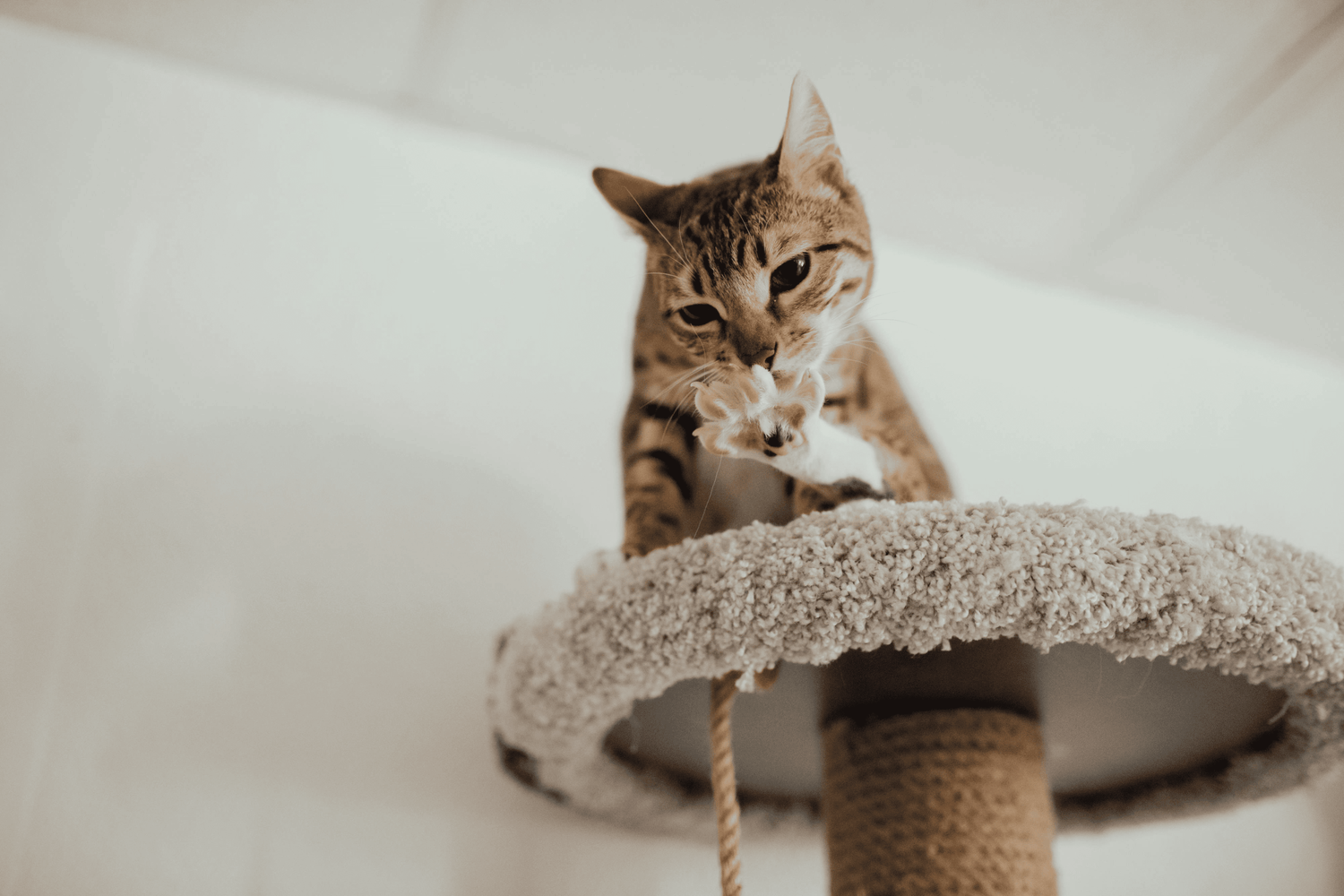
For many years, living exclusively indoors was presented as the safest option for cats. Fewer risks, fewer diseases, fewer accidents. And from a purely medical standpoint, this is true: indoor cats tend to live longer. But longevity alone does not equal well-being. Over time, veterinarians and animal behavior researchers have come to a more nuanced conclusion, one that raises an important question: are indoor cats truly fulfilled?
In the wild, a cat’s day is structured around movement. Hunting, stalking, observing, reacting. Even when not actively chasing prey, a cat’s body and mind remain engaged. These behaviors are not hobbies; they are deeply wired survival mechanisms. When a cat transitions to an indoor life, those instincts do not disappear. They simply lose their natural outlet.
This mismatch between instinct and environment is one of the most underestimated issues in modern feline health.
An indoor cat may appear calm, even lazy, but inactivity is often misleading. Behind the stillness can hide frustration, anxiety, or chronic under-stimulation. Over time, this lack of physical and mental engagement can manifest in subtle but serious ways: weight gain, sleep disturbances, excessive grooming, sudden bursts of energy at night, or destructive behavior that owners often misinterpret as “bad habits.”
From a physiological perspective, movement plays a critical role in regulating a cat’s metabolism, muscle tone, and joint health. Cats are designed for short, intense bursts of activity. Without regular stimulation, muscle mass slowly decreases, joints stiffen, and energy balance becomes harder to maintain. This is one of the reasons obesity is now one of the most common health concerns seen in indoor cats worldwide.
But the impact goes far beyond the body.
Neurological studies in animals have shown that mental stimulation is directly linked to emotional regulation. When a cat engages in purposeful movement, chasing, reacting, anticipating, its brain releases neurotransmitters associated with satisfaction and stress reduction. In contrast, prolonged boredom increases cortisol levels, the hormone linked to chronic stress. Over time, elevated cortisol weakens the immune system, disrupts sleep cycles, and alters behavior.
This is why some indoor cats seem restless without an obvious cause. The environment may be safe, but it is not stimulating.
One of the most common misconceptions among pet owners is that activity requires long play sessions or constant interaction. In reality, cats do not need hours of exercise. What they need is regular, instinct-driven stimulation. Short moments of movement, scattered throughout the day, are far more effective than a single intense play session.
The key lies in unpredictability.
Cats are not motivated by repetition. A toy that moves the same way every time quickly loses its appeal. What truly activates a cat’s hunting brain is irregular motion, sudden changes in direction, pauses, acceleration. This mirrors the behavior of prey and triggers focus, engagement, and satisfaction. When movement feels “alive,” cats naturally participate.
This is particularly important for cats living in apartments or smaller spaces. Without environmental enrichment, the home becomes static. Everything smells the same, looks the same, behaves the same. Over time, this sensory monotony dulls curiosity and increases lethargy. Reintroducing movement and novelty restores a sense of purpose to the cat’s day.
There is also a strong link between physical activity and sleep quality. Cats that engage in meaningful play during the day tend to sleep more deeply and more regularly. This explains why many owners notice fewer nighttime zoomies once their cat’s daily activity needs are met. The cat’s internal rhythm realigns with its natural cycle: hunt, eat, rest.
Interestingly, increased activity often leads to calmer behavior, not more chaos. A stimulated cat is less likely to seek attention through excessive meowing or disruptive actions. Instead, it becomes more balanced, confident, and relaxed.
From a behavioral standpoint, movement also reinforces a cat’s sense of control over its environment. Engaging with responsive objects, things that react to touch or movement, helps cats feel capable and effective. This is especially beneficial for timid or anxious cats, as it builds confidence without social pressure.
Modern feline care is slowly shifting away from the idea that “safe” is enough. Safety is essential, but fulfillment is what defines quality of life. An indoor cat’s environment must compensate for what has been removed from the outdoors: challenge, stimulation, and purposeful movement.
When we understand this, we stop asking why our cats behave the way they do, and start giving them what they actually need.
An active lifestyle is not about forcing cats to move. It’s about respecting who they are.

Leave a comment
This site is protected by hCaptcha and the hCaptcha Privacy Policy and Terms of Service apply.